
Clothing and Textile Reuse and Recycling
Wondering what you can do with old clothes and textiles? Reduce your waste by repairing, repurposing, sharing and donating your clothing, bedding, curtains, towels and other household fabrics.
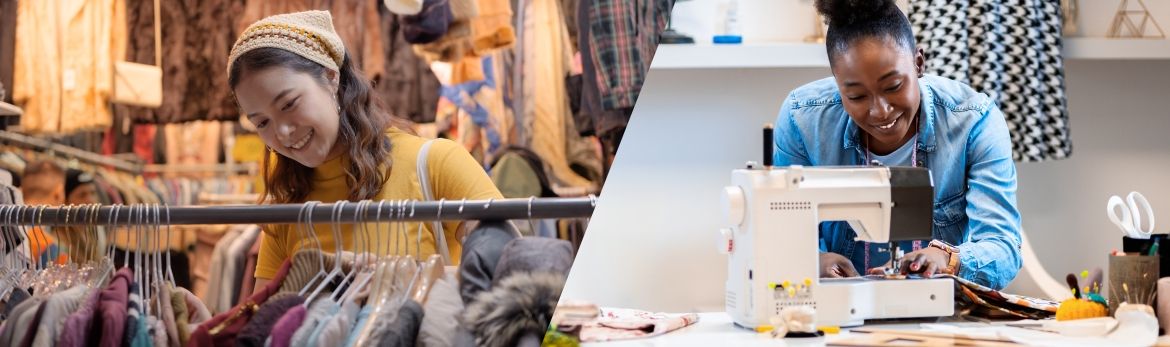
From T-shirts to tea towels, every textile has an impact on the environment. Before you toss it, consider these options:
- Alter it – if a favourite piece no longer fits right, find someone who can tailor or alter it to tighten, loosen, shorten or lengthen as needed
- DIY fixes – find repair and mending tutorials, like sewing a button or mending a tear at loveyourclothes.ca
- Repair – skilled volunteers can help mend clothing and other textiles at a Repair Café
- Repurpose – turn it into something else wearable or useful; think pants to shorts, towels to rags, bedding to quilts and more
- Swap or share – maybe a friend or family member could use that item
- Donate or recycle - find a textile donation bin at a York Region Waste Depot
For other reuse options near you search the Share Reuse Repair Hub
Rethink Your Wardrobe
Buy less and choose well
Avoid impulse purchases, including low cost, fast fashion items that don’t last. Choose well-made, quality items that are durable.
Buy second-hand
Search thrift stores and online markets to save money and keep used items in use longer.
Love your clothes longer
To help your clothes last longer follow the care labels carefully, wash only as needed (not after every wear) and air dry when possible.
Where Can I Donate Textiles?
Textile collection bins are available at select York Region waste depots in partnership with Diabetes Canada.
Locations
- East Gwillimbury Household Hazardous Waste and Recycling Depot
- Elgin Mills Community Environmental Centre
- Georgina Transfer Station
- McCleary Court Community Environmental Centre
Accepted Items
- Accessories and bags
- Clothing of all types
- Curtains and drapes
- Sheets, blankets and towels
- Shoes and boots
- Sleeping bags
- Stained, worn, torn and scrap textiles
Please make sure items are:
- Bagged
- Clean
- Dry
- Odour-free
You can drop off multiple bags of clothing / textiles, but they must fit in the bin.
Not Accepted
- Electronics
- Hangers
- Hazardous materials
- Household goods
- Textiles contaminated with grease, oil, blood or chemicals
- Wet or mouldy textiles
Looking for a donation location closer to home?
Search:
Why Textiles Matter
Many people are surprised to learn that clothing and household textiles make up a significant portion of household waste. In 2025, York Region waste audits showed about 17% of what people put in the garbage included items like clothing and textiles.
When textiles end up in the garbage:
- Creates environmental impacts - from making to transporting textiles – over and over again
- New resources are needed to produce more clothing and textiles
- Synthetic fabrics like polyester or rayon, that don’t break down easily, remain in the environment for years
- Valuable materials are wasted
Textile Facts and Stats
- An estimated 1.3 million tonnes of clothing is thrown away each year in Canada, with only 24% of it being diverted for reuse, while the remaining 76% is sent to landfill or incineration. (Cheminfo Services Inc., commissioned by Environment and Climate Change Canada, 2022)
- Up to 95% of the textile waste put in the garbage in Canada could have been reused, representing a potential economic benefit of up to $7 billion CAD (National Association for Charitable Textile Recycling, 2023)
- Most unwanted textiles can be resold or reused as-is, repurposed into rags or insulation or recycled into new products. (Cheminfo Services Inc., commissioned by Environment and Climate Change Canada, 2022)
- In 2022, Ontario threw away almost 378,000 tonnes of clothing and textiles, an average of 25 kilograms per person (Environment and Climate Change Canada, 2026)
- The fashion and textile sector produces approximately 10% of the global greenhouse gas emissions (National Association for Charitable Textile Recycling, 2023)
- Extending the life of a single garment by 9 months could reduce its emissions impact by 20 to 30% (National Association for Charitable Textile Recycling, 2023)
Keep clothing and textiles in use longer to help protect our environment.