
Spotted Lanternfly: Spot it? Snap it, Catch it, Report it!
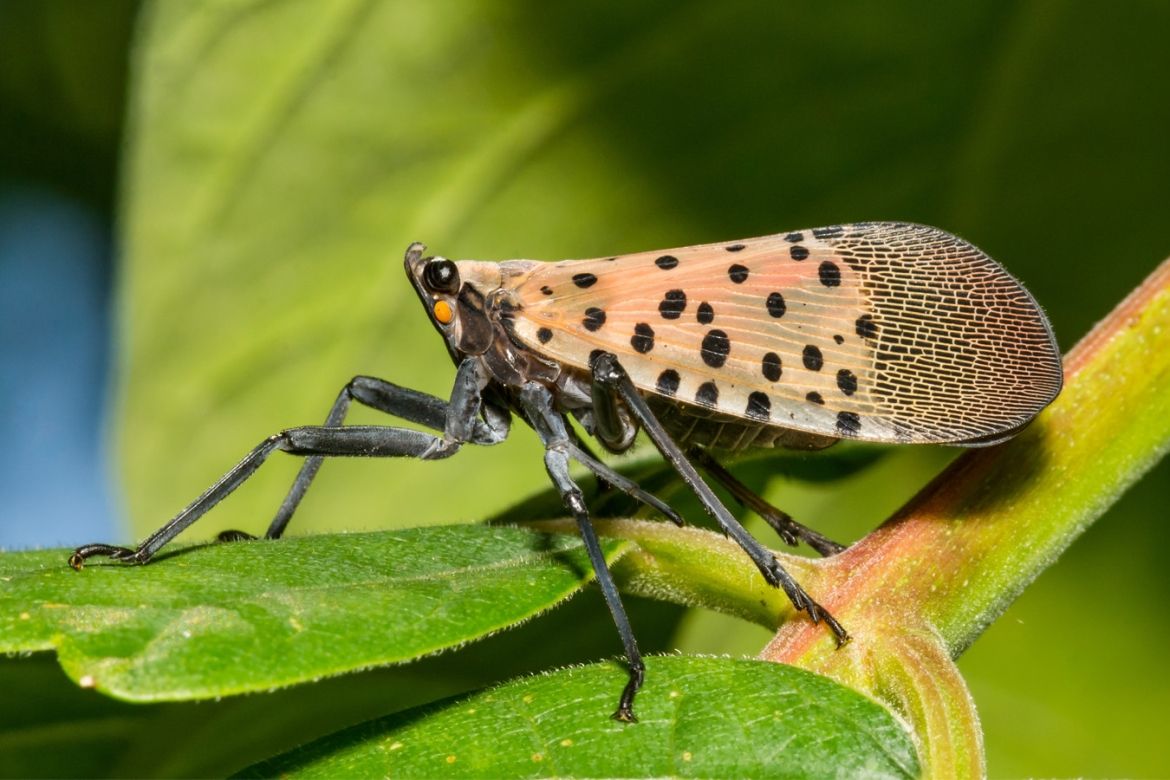
Spotted Lanternfly: Now in Windsor, Ontario!
On September 15, 2026, the Canadian Food Inspection Agency (CFIA) confirmed an infestation of Spotted Lanternfly (Lycorma delicatula) in Windsor, Ontario. Restrictions have been put in place to prevent the movement of regulated materials including potentially infested plant materials, and monitoring of the surrounding area is ongoing to determine the extent of the infestation and next steps.
Spotted Lanternfly has not yet been sighted in York Region.
This invasive insect feeds on a wide range of plants, shrubs and trees including Dogwood, Forsythia, Rose bushes, Grapevine, Maple, Oak and Walnut and a variety of garden vegetable plants. It sucks sap from leaves and stems and excretes a sugary, sticky substance called honeydew which promotes the growth of grimy, black sooty mould. This can weaken the plant, shrub or tree making it more susceptible to other pests and disease and in some cases lead to death.
Spotted Lanternfly has been recognized as a potential threat to the Canadian grape, fruit tree and forestry industries and could become a public nuisance.
- Spotted Lanternfly congregates in large numbers which can be alarming and bothersome
- The honeydew excreted by Spotted Lanternfly can:
- Cover patios, decks, cars and outdoor furniture, making them sticky and difficult to clean
- Foster the growth of black sooty mould which can be unsightly and produce an unpleasant odour but poses no risk to humans or pets
- Attract hornets and wasps which pose a risk to people allergic to stings
Spotted Lanternfly does not bite or directly harm humans or pets but could cause permanent and costly damage to trees found in the York Regional Forest, local parks and greenspaces, along Regional and local roads and on private property. Wineries in York Region may also be impacted.
Lifecycle Stages of Spotted Lanternfly
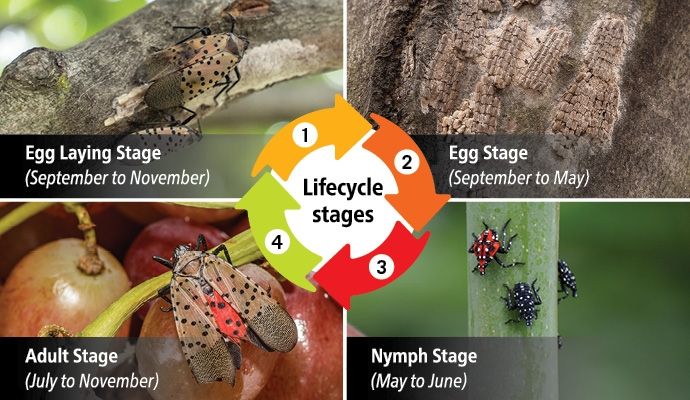
- Egg Laying Stage (September to November): In the fall, females lay egg masses on trees and other outdoor objects; eggs are laid in straight lines with thirty to fifty eggs per mass; egg masses look like wet, grey putty when first laid, and cracked mud when dried
- Egg Stage (September to May): The insect spends the winter in the egg stage and hatches the following spring; eggs can survive -11°C (12°F) temperatures but struggle below that
- Nymph Stage (May to June): In the spring, eggs hatch into nymphs which are black with white spots and turn red as they develop
- Adult Stage (July to November): Nymphs turn into adults mid-summer and mate in late summer; adults are gray with black spots and have a bright red underwing; adults only live for a few weeks
Signs of Spotted Lanternfly
- “Muddy grey” egg masses on plants, tree branches and trunks, and outdoor objects like patio furniture, vehicles, firewood and rocks
- Large number of nymphs or adults at the base of trees or in the canopy; they are easiest to spot at dawn and dusk when moving up and down the tree
- Accumulation of honeydew and/or grimy, black sooty mould on plants, at the base of trees and/or dark streaks of sap flowing down the bark
- Increase in wasp and hornet activity due to exposed sap and honeydew
Spotted Lanternfly has not yet been sighted in York Region. Early detection is the most successful way to help prevent its arrival and spread. Learn the signs and stages of Spotted Lanternfly and remember to:
- Spot it - Be on the lookout for nymphs and adults in the spring and summer and egg masses in the fall and winter
- Snap it – Take a picture or video of the Spotted Lanternfly
- Catch it – Scrape egg masses, nymphs or insects into a sealable container
- Report it – Report suspected findings immediately to the Canadian Food Inspection Agency (CFIA)
Quick facts
- Spotted Lanternfly (Lycorma delicatula) is native to Asia and believed to have arrived in the United States in 2012 via egg masses laid on stone imports; the first infestation was detected in Pennsylvania in 2014 and has since spread to New York and Michigan
- Spotted Lanternfly has been recognized as a potential threat to the Canadian grape, fruit tree and forestry industries
- The proximity of Spotted Lanternfly along the United States border and the transport of the insect or egg masses pose a high risk of its arrival and infestation to Canada
- While there have been Spotted Lanternfly sightings in Ontario including Mississauga, St. Catharines and Windsor and in Quebec, the Canadian Food Inspection Agency has not confirmed any established populations
- If travelling back from infested areas of the United States, check your car, camper, trailer, recreational vehicle and outdoor items like camping equipment, and considering running your vehicle through a high-pressure car wash before returning to Canada
- Do not move branches or firewood as you could accidentally spread Spotted Lanternfly to new areas
- York Region staff is working closely with the Canadian Federal Inspection Agency – the government body in charge of monitoring and surveying areas where sightings of Spotted Lanternfly have been reported
Learn more about Spotted Lanternfly at Invasive Species Centre
Learn about other invasive species impacting York Region at york.ca/InvasiveSpecies